

The City of Tulsa Stormwater Quality monitors thirty of Tulsa’s largest watersheds through the watershed characterization program. Since the beginning of the watershed characterization program, the City of Tulsa has identified at least 40 species of fish and 180 species of macroinvertebrates in Tulsa’s streams. Monitoring programs are required by the City of Tulsa’s Municipal Separate Storm Sewer permit, issued by the Oklahoma Department of Environmental Quality. These programs aim to protect the beneficial uses of Tulsa's creeks and the habitat their diverse biological communities rely on.
Using this Story Map, the public can learn more information about the watersheds in their own backyard. The information covered includes background information about the watersheds, physical locations and descriptions, species diversity, and pollutant data. Each watershed map is interactive, and the text descriptions include links to additional sources of information. Learning about the watershed you live in can help you learn about issues that may affect your health and safety, such as flooding and pollution.
What is a watershed?
A watershed is an area of land where all of the moisture that falls on it flows into the same waterway.
A watershed can be as small as a backyard or many thousands of square miles. For example the watershed most Tulsans are familiar with might be the Arkansas River. The Arkansas River begins in Colorado's Rocky Mountains and flows 1,469 miles to the Mississippi River. It drains parts of seven states, including Colorado, New Mexico, Kansas, Texas, Oklahoma, Missouri, and Arkansas - a watershed of 168,002 square miles. This makes it the 9th largest watershed in the U.S.
Why are watersheds important?
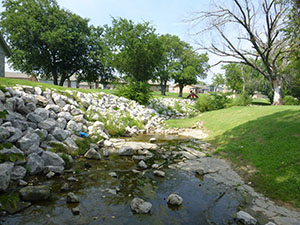
Tulsa is required, under the Clean Water Act, to eliminate sources of pollution in its stormwater runoff. Knowing the boundaries of a watershed where pollution originates can help find the pollution source.
Many things cause pollution in streams including things we wouldn't normally think of: grass clippings, pet wastes, leaking vehicle fluids, sediment, trash, as well as many other things listed online.
Learning about what watershed you live in can help you learn about issues that may affect your health and safety, such as flooding and pollution.
Tulsa's Stormwater Quality Section began conducting stream sampling on 30 of Tulsa's largest watersheds in 2012. As we learn more about the health of these streams we will share more information with the public on these waterways.
Tulsa is a beautiful city with wonderful natural areas. Its streams need to be recognized as a community asset given their function and beauty. We hope the "My Watershed" tool enables you to learn more about Tulsa's wonderful streams.
Watershed Wildflower Meadows
The City of Tulsa Stormwater Quality Department is planting Watershed Wildflower Meadows across Tulsa to help protect local waterways and support native wildlife. Tulsa’s stormwater system carries rainwater directly to Bird Creek and the Arkansas River. These meadows act as natural buffer that slows water, filters pollutants, and keep our streams healthier.
Watershed Wildflower Meadows are planted areas of native flowers and grasses designed to:
By working with nature, these meadows help reduce stormwater impacts on Tulsa’s Municipal Separate Storm Sewer System (MS4).
Why Wildflower Meadows Matter
These native landscapes provide powerful benefits for Tulsa:
Completed Wildflower Meadow Locations:
Tulsa currently has four active wildflower meadow sites, totaling 10 acres:
Native seeds were used by regionally sourced providers.
Native Plants You May See:
Wildflower Meadows feature a variety of native species, including:
(Plant species may vary by meadow location.)
Where to Find Wildflower Meadows:
The Stormwater Quality Department is evaluating eight additional locations for future meadows, including:
Growing Smarter Sustainable Stormwater Solutions
Watershed Wildflower Meadows are one more way Tulsa is investing in sustainable infrastructure, healthy waterways, and a more resilient Tulsa for future generations.
.png)


 Facebook
 Twitter
 Mail
Mail