
Each year, the City of Tulsa is required by the Environmental Protection Agency (EPA) to inform customers that their water service lines will be inspected for lead. This applies to homes that have not previously been inspected during the True Reads program.
|
|
The City of Tulsa began inspections in January 2024 and it will take an estimated four years to complete work. |
We have not yet inspected your service line but will do so during the True Reads meter replacement project. |
|
The City of Tulsa does not expect to find lead service lines in our system. |
If lead is found, the homeowner will be immediately notified. |
Daily results of service inspections are available via an online map. |
If you received a letter, the City of Tulsa has not inspected your service line yet, but the City will inspect it during the True Reads meter replacement project. Beginning in January 2024 and taking an estimated four years to complete, the documented service line material is available online. Results are updated daily as work is completed.
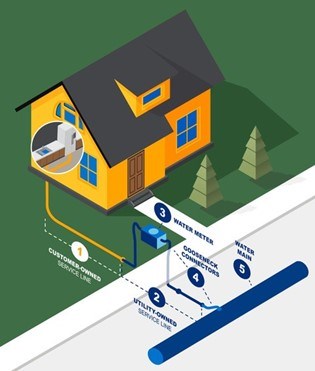
A service line is the underground pipe that connects a home or building to the larger mainline in the street. The service line to a home is often installed at the time the house is built. For example, if your house was built in 1930, your service line was likely also installed in 1930.
The City of Tulsa has historical records that copper and galvanized service lines were widely used throughout the city. Lead service lines (if found) would be a rare occurrence, but we recognize there is no safe level of lead, and the City of Tulsa is committed to ensuring our system is free of lead pipes.
|
The customer-owned service line is the pipe that is under the property of the address and connects to the utility-owned service line. The utility-owned service line connects the customer-owned service line to the water main. This portion of service line is in the The water meter is the device that measures how much water a building has used. As part of the True Reads project, 140,000 water meters are being replaced. Gooseneck connectors are the fitting that allows services lines to attach to each Connectors are included in service line inspections. The water main is the large pipe that brings clean, treated water from the City of Tulsa water treatment plants to different areas of town, typically located in the street. |
 |
While it is unlikely that your service line is lead or galvanized requiring replacement, below is additional information on lead and how you can reduce your risk to lead exposure:
What Are the Health Effects of Lead?
Exposure to lead in drinking water can cause serious health effects in all age groups. Infants and children can have decreases in IQ and attention span. Lead exposure can lead to new learning and behavior problems or exacerbate existing learning and behavior problems. The children of women who are exposed to lead before or during pregnancy can have increased risk of these adverse health effects. Adults can have increased risks of heart disease, high blood pressure, kidney, or nervous system problems.
Where Does Lead Come From?
Lead is a toxic heavy metal that occurs naturally. Though lead can be found in all parts of our environment, much of our exposure comes from human activities including the use of fossil fuels, some types of industrial facilities, and past use of lead-based paint in homes. Lead enters drinking water primarily through the corrosion, or wearing away, of materials containing lead in household plumbing and the water distribution system, such as the pipes that connect your house to the water main (service lines). Lead solder and plumbing fixtures, such as faucets, within your home/building may also contribute to lead in your drinking water.
Steps You Can Take to Reduce Your Exposure to Lead in Your Drinking Water:
Although we are taking action to reduce lead levels, elevated lead levels may also be due to conditions unique to your home, such as the presence of lead solder or brass faucets, fittings, and valves that may contain lead. There are actions you can take to reduce exposure. We strongly urge you to take the steps below to reduce your exposure to lead in drinking water.
Visit EPA's web site or contact your health care provider for more information on reducing lead exposure around your home/building and the health effects of lead.
City of Tulsa staff are available to answer additional questions you may have. For questions, please call 311 or email at Tulsa311@cityoftulsa.org.
For more information on Tulsa’s efforts to find and remove lead in our system, please visit True Reads online.
The City of Tulsa is committed to providing safe and reliable water to all residents, businesses, and visitors.
.png)


 Facebook
 Twitter
 Mail
Mail